What is hair wax
Hair wax is a thick, pliable styling product built on a wax base — beeswax, microcrystalline wax, carnauba, or a blend. It gives medium to strong hold with a low-to-medium shine, stays reworkable all day rather than setting hard, and resists humidity better than anything water-based. The trade-off is washing: most true waxes are oil-based and need a proper degreasing routine rather than a single shampoo.
What hair wax actually does
Wax covers the hair shaft in a soft, tacky film. That film adds grip and weight, so strands hold their position and stay separated. Because wax never hardens, you can rework the shape at any point — run your hands through it at lunchtime and it behaves the same as it did that morning.
Three properties define the category:
Pliability. Wax stays soft indefinitely. Gel forms a rigid cast that cracks the moment you touch it; wax doesn’t.
Humidity resistance. This is the real advantage and the reason the format has survived every trend since the 1950s. Beeswax is hydrophobic — it forms a barrier that repels moisture. On a humid day, an oil-based wax holds a shape that a water-based product loses by mid-morning.
Control over shine. Wax can be built up for more shine or worked in sparingly for less, and it responds to how much you emulsify it. Very few formats give you that much say in the finish.
Oil-based vs water-based wax
This distinction matters more than any other in the category, and it is the one most product pages are vaguest about.
Oil-based (traditional) wax is built on petrolatum, mineral oil, beeswax and microcrystalline wax. Best humidity resistance, longest-lasting hold, and a “never-dry” feel — the product stays workable in the hair rather than setting. It does not rinse out with one wash. You need a degreasing routine.
Water-based wax is an emulsion designed to mimic the feel while rinsing out cleanly. Easier to live with, meaningfully less humidity-resistant, and it dries down rather than staying wet.
How to tell: look for “water-soluble” on the label. If it doesn’t say so, assume oil-based and plan the wash accordingly. A good brand will tell you outright — REUZEL states “This product is NOT water soluble” on the Green and Pink pages, because the alternative is a customer discovering it in the shower.
Hair wax vs the other formats
| Hold | Shine | Washes out | Humidity | |
|---|---|---|---|---|
| Oil-based wax / grease | Strong | Medium | Needs degreasing | Excellent |
| Water-based pomade | Medium–strong | Medium–high | Easily | Good |
| Clay | Medium–strong | None | Easily | Good |
| Paste | Medium | Low | Easily | Moderate |
| Fiber | Medium–strong | Low | Easily | Good |
| Gel | Strong, rigid | Variable | Easily | Poor |
| Cream | Light | Low | Easily | Poor |
vs pomade — Genuinely overlapping, and the naming across the industry is inconsistent. Broadly: a pomade leans smoother and shinier, a wax leans grippier and more textured. Many traditional oil-based pomades are wax-based products — including ours. The more useful question is always oil-based or water-based.
vs clay — Clay gives more volume and a completely dry matte finish. Wax gives far more humidity resistance and a softer, more workable feel.
vs paste — Paste is the water-soluble, lower-commitment version of the same idea. If you like the sound of wax but not the washing routine, buy a paste.
How to use hair wax
1. Dry hair, always. Wax on wet hair won’t distribute — it clumps. This rule is firmer for wax than for any other format.
2. Take one knuckle’s worth. Scrape it out with the back of a finger. Wax is dense and easy to overdo.
3. Emulsify properly — and for longer than you think. Rub it between your palms for a good fifteen to twenty seconds, until it’s spread evenly across both hands and turned slippery. Wax needs more warming than any other product before it will move through hair. Skip this and you get visible clumps.
4. Crown first, then forward. Start at the crown, work toward the front, then from scalp to ends. Comb or push into shape.
5. Layer it if you need more. Waxes cocktail well — a stronger grease worked into the front over a medium one through the rest gives you extra hold exactly where a style needs it.
6. Plan the wash. Condition on dry hair, comb through, rinse, then shampoo. Full routine below.
Getting it out: the degreasing routine
Oil-based wax doesn’t respond to shampoo alone, because shampoo can’t get through the oil to lift it. The order has to change:
- Comb Daily Conditioner through dry hair and leave it three to five minutes. A single minute will not shift the wax.
- Rinse the conditioner out, then wet the hair and work in Scrub Shampoo.
- Rinse, then finish with Daily Shampoo.
Three steps, about five minutes. It’s the only reliable way to remove an oil-based product, and almost nobody does it in the right order. If you use wax regularly, this is worth learning once. More on why build-up matters in our guide to clarifying shampoo.
Who hair wax suits
Good for: short to medium hair; normal to thick and coarse textures; curly, thick and unruly hair that needs real control; humid climates; anyone who restyles during the day; classic barbershop shapes — pompadours, side parts, slick-backs.
Poor for: fine hair, where the weight flattens the volume you’re trying to build — use a paste, a texture powder or a fiber instead; very long hair; anyone who washes daily and won’t run a degreasing routine.
REUZEL’s hair waxes: Green and Pink
Green and Pink Pomade Grease are wax-based products. Beeswax and microcrystalline wax sit in the top five ingredients of both. They are what people mean when they say hair wax in the strong-hold, humidity-proof, barbershop sense — and they’re the two tins the brand was built on.
Green Pomade Grease — medium hold, medium shine. The more forgiving of the two: flexible, reworkable, and easy to live with day to day while still giving you the humidity resistance and never-dry feel of an oil base. Best on medium-thickness, wavy and slightly thick hair. Formulated with beeswax so it glides through without clumping, and with tea tree oil, which breaks down build-up and makes it easier to wash out than a traditional grease.
Pink Pomade Grease — the firmer sibling. More hold, more shine, more weight. Built for thick, coarse and genuinely unruly hair, and for styles that have to survive the whole day without a touch-up.
Neither is water-soluble. Both need the degreasing routine above. That’s the honest trade for the hold and the humidity resistance, and we’d rather you knew before you bought.
Pro tip from the shop floor: mix a little Pink into Green and work it through the front of the cut. You get extra hold exactly where the style needs it without weighing down the rest.
If you want a wax finish without the washing
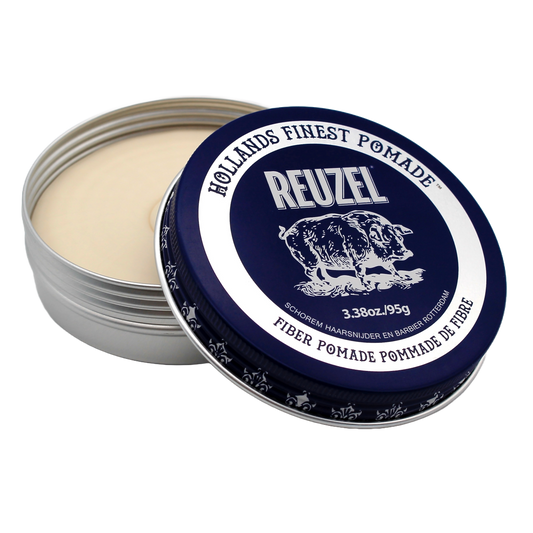
- Fiber Pomade — beeswax-based, behaves like a wax for reworkable all-day styling, built for texture and separation, and non-flaking.
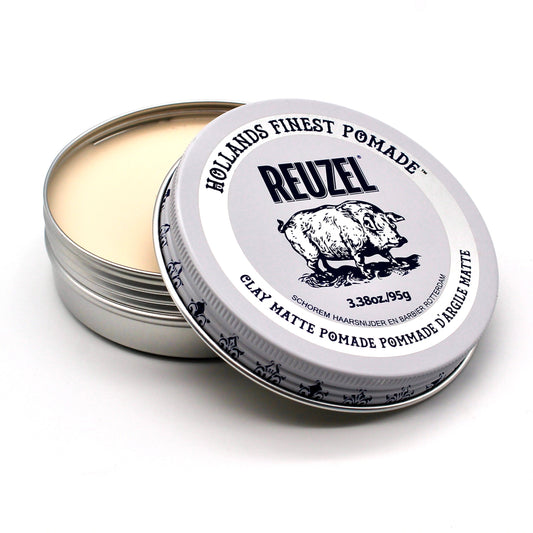
- Clay Matte Pomade — if what you actually want from wax is a matte finish and volume.
- Matte Styling Paste — the water-soluble everyday alternative.
For the full format comparison, see hair clay vs pomade vs wax, or browse hair styling products.
Frequently asked questions
What is hair wax? Hair wax is a thick styling product built on a wax base such as beeswax or microcrystalline wax. It gives medium to strong hold with low to medium shine, stays pliable and reworkable through the day, and resists humidity far better than water-based products. Most true waxes are oil-based and need a degreasing routine to remove.
What does hair wax do? It covers the hair in a soft, tacky film that adds grip and weight, holding strands in position and keeping them separated. It doesn’t harden or crack, so the style can be reshaped at any point in the day.
Hair wax vs pomade — what’s the difference? Pomade generally reads smoother and shinier; wax reads grippier and more textured. In practice the categories overlap heavily, and many traditional oil-based pomades are wax-based products. The more useful question is whether a product is water-soluble or oil-based, because that determines how it washes out.
How do you use hair wax? Apply to dry hair. Take a knuckle’s worth, rub it between your palms for fifteen to twenty seconds until it spreads evenly, then work it in from the crown forward and from scalp to ends. Comb or push into shape.
Does REUZEL make a hair wax? Yes. Green and Pink Pomade Grease are both wax-based, with beeswax and microcrystalline wax among their main ingredients. Green is medium hold and medium shine; Pink is heavier, with more hold and more shine. Fiber Pomade is also beeswax-based and behaves like a wax with a drier finish.
Is hair wax bad for your hair? No. Wax works on the hair shaft, not the follicle. The realistic issue is build-up: oil-based waxes that aren’t washed out properly accumulate on the hair and scalp. Use a deep-cleansing shampoo regularly and learn the degreasing routine.
Does hair wax wash out? Water-based waxes rinse out with a normal shampoo. Oil-based waxes don’t. Comb conditioner through dry hair, rinse, then use a scrub or deep-cleansing shampoo, and finish with a daily shampoo.
Is hair wax good for fine hair? Usually not. Wax is dense enough to weigh fine hair down and flatten the volume you’re trying to create. A texture powder, a light paste or a fiber product will serve fine hair better.
Is hair wax the same as hair grease? Broadly, yes, in how the industry uses the words. A grease is an oil-based product built on petrolatum and waxes; a wax is a product built on waxes. Most oil-based greases, including REUZEL Green and Pink, contain both — which is why they’re described as wax and oil based.
Find your hold — browse REUZEL hair styling products.