Does beard growth oil work
No — not for growth. There is no cosmetic oil that makes facial hair grow faster, thicker, or fill in patches. Beard growth is set by genetics and by how sensitive your follicles are to androgens, and neither is something an oil applied to the skin can change. What beard oil genuinely does is condition the skin and soften the hair, which makes an existing beard look noticeably fuller. That’s a real improvement. It just isn’t growth.
We sell beard oil. We’d still rather tell you what it does than what you’d like to hear.
What actually determines beard growth
Three things, and none of them is a bottle.
Genetics. How dense your beard is, where it grows, and where it doesn’t, are inherited. Patchy cheek lines run in families.
Androgen sensitivity at the follicle. Testosterone converts to DHT, and DHT is what drives terminal facial hair. What matters is not how much you have but how sensitive each individual follicle is to it — which is genetic. This is why two men with identical hormone levels grow completely different beards, and why “boost your testosterone” advice mostly doesn’t change beards.
Age. Beards continue filling in through the twenties and often into the early thirties. A patchy beard at 21 is frequently a full beard at 28. This is the single most useful thing to know if you’re young and frustrated.
None of those three is affected by anything you rub on your face.
So what are beard growth oils selling?
Most are ordinary beard oils with growth language on the label. Some add ingredients with a story attached.
Castor oil. The most common claim in the category. There is no good clinical evidence it grows hair. It’s a heavy, viscous oil that conditions well, which is a genuine benefit sold as the wrong one.
Peppermint or menthol. Creates a tingle and increases surface blood flow briefly. Some rodent research on topical peppermint oil is cited constantly; it does not establish an effect on human beard growth.
Biotin. Deficiency causes hair problems, and deficiency is rare. Supplementing when you aren’t deficient adds nothing, and topical biotin is poorly absorbed regardless.
Rosemary oil. Has some published research in scalp androgenetic alopecia. That is a different condition on a different area, and it does not transfer to beards without evidence that doesn’t currently exist.
Vitamin E, argan, jojoba. Genuine conditioners. No growth mechanism.
The pattern: these are all decent skin and hair ingredients being marketed for something they don’t do.
What “it worked for me” usually means
Beard growth oil reviews are full of people who saw a difference. They probably did — just not from growth.
Conditioning makes a beard look fuller. Softer hair lies flatter and in the same direction, covering more skin and reflecting light more evenly. Coated hair is optically slightly thicker. On a patchy beard this can be a visible improvement.
People start using oil at the start of a growth cycle, exactly when a beard is filling in on its own anyway.
Less itch means fewer people shave it off in week three. The single biggest reason beards don’t get full is that they get abandoned early. An oil that stops the itch genuinely does result in a fuller beard — by helping you keep it long enough to grow.
That last one is real, it’s worth something, and it’s not what the label is claiming.
What does affect beard growth
Time. Terminal facial hair grows roughly half an inch a month, and a patchy area often fills as surrounding hairs lengthen and cover it. Most people judge a beard far too early. Give it a full three months before deciding.
Not shaving it. Trimming does not change growth rate. The beards that look best are the ones that were left alone through the awkward phase.
Sleep, diet and stress. Not a growth hack, but severe deficiency, chronic stress and poor sleep all affect hair generally. Correcting a genuine problem helps; optimizing an already normal routine does not.
Underlying medical issues. Sudden beard loss, patchy round bald spots, or hair loss elsewhere at the same time are worth seeing a doctor about. Alopecia areata affects beards and is a medical condition.
Minoxidil. The one intervention with actual evidence behind it — and it’s an over-the-counter drug, not a cosmetic, and beard use is off-label. Talk to a doctor before starting anything. No REUZEL product contains minoxidil or any other hair-growth active.
What to buy instead
Buy a beard oil for what beard oil does. Skip anything with growth on the front of the bottle — not because it’s harmful, but because you’re paying a premium for a claim it can’t deliver, and often getting a worse conditioner in the process.
Look for: lightweight non-comedogenic oils, a formula that absorbs rather than sits on the surface, and honest copy.
Ignore: before-and-after photos with different lighting, “clinically proven” with nothing after it, and any cosmetic promising to fill patches.

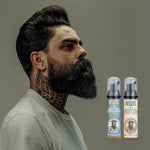
REUZEL Beard Serum is our beard oil. It softens the beard and conditions the skin underneath, lightweight and non-greasy. It makes no growth claim because it doesn’t have one to make.
Frequently asked questions
Does beard growth oil work? Not for growth. No cosmetic oil makes facial hair grow faster, thicker or fill in patches — growth is determined by genetics and follicle sensitivity to androgens. Beard oil does condition the skin and soften the hair, which makes an existing beard look fuller.
Does beard oil help beard growth? Not directly. It helps indirectly by reducing the itch and dryness that cause a lot of people to shave off a new beard in the first few weeks. Keeping a beard long enough to fill in is the closest thing to a growth benefit an oil provides.
Does castor oil grow a beard? There is no good clinical evidence that it does. Castor oil is a heavy, effective conditioner, which is likely what people are noticing.
Why do beard growth oils have so many good reviews? Because conditioning makes a beard look fuller, people usually start using oil at the beginning of a growth cycle, and reduced itch means fewer beards get shaved off early. Those are real improvements from something other than growth.
What actually makes a beard grow? Genetics, androgen sensitivity at the follicle, and age. Beards commonly continue filling in through the twenties and into the early thirties.
Can anything make a patchy beard fill in? Time is the main one — patches often close as surrounding hair lengthens. Minoxidil has evidence behind it but is a drug used off-label for beards and should be discussed with a doctor. No cosmetic oil will do it.
Is beard growth oil a scam? Not usually a scam — most are ordinary beard oils with growth language on the label. You get a working conditioner and an unsupported claim, generally at a premium.
How long should I wait before deciding my beard is patchy? At least three months. Facial hair grows around half an inch a month and patches frequently close as surrounding hairs lengthen and cover them.
This article is general information, not medical advice. Sudden or patchy beard hair loss should be seen by a doctor.